
A blastocyst biopsy is a laboratory procedure performed at licensed fertility clinics to remove a small sample of trophectoderm cells for optional genetic testing (PGT-A). This process occurs after the embryo reaches the blastocyst stage, usually on Day-5 or Day-6. The biopsy does not remove cells from the inner cell mass, and all medical procedures are performed solely by clinics, not EggDonors4All.
Sample taken from TE, not ICM
Enables optional PGT-A testing
Performed by embryologists in IVF labs
Used for embryo assessment before transfer
EggDonors4All provides education only
Many intended parents hear terms like blastocyst biopsy, PGT testing, and Day-5 embryo evaluation during IVF, but few understand the laboratory steps that take place behind the scenes. This guide explains—in a clear, non-medical way—how embryos are evaluated once they reach the blastocyst stage.
EggDonors4All provides education and donor-cycle coordination. All embryology procedures, including biopsy and testing, are performed exclusively by licensed fertility clinics.
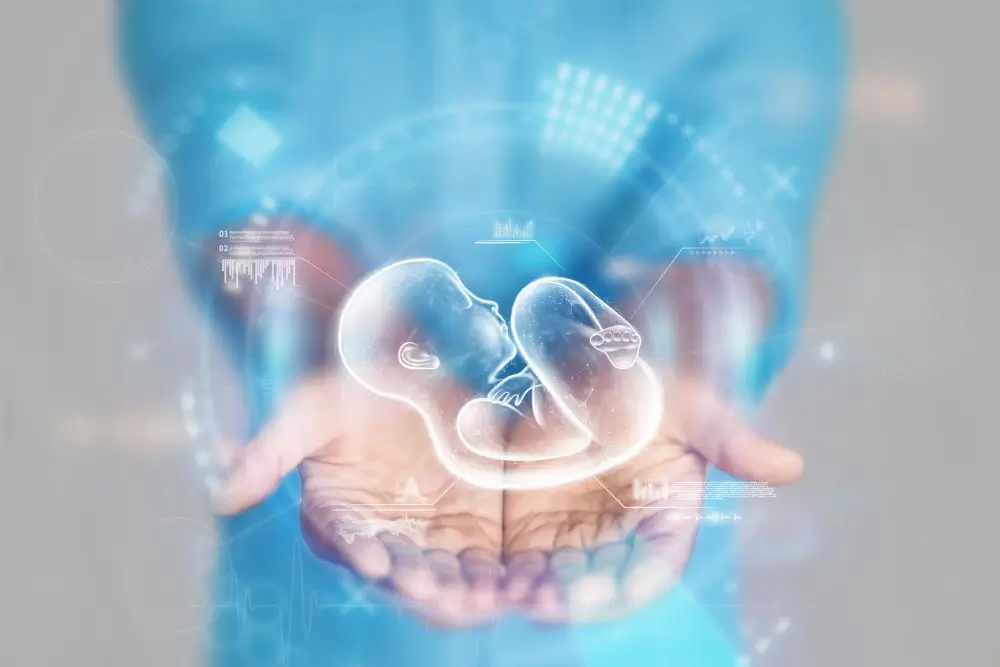
A blastocyst biopsy is the removal of a small group of trophectoderm (TE) cells from a Day-5 or Day-6 embryo.
Purpose
To allow optional genetic testing (PGT-A or other panels) before the embryo is frozen or transferred.
Important notes
At Day-5/Day-6, embryos have:
Sampling TE cells is preferred because:
Once the blastocyst begins interacting with the endometrium:
Step 1
Embryo reaches blastocyst stage
Evaluation of ICM, TE, and expansion level.
Step 2
Embryo positioned for biopsy
A specialized microscope and micro-tools are used.
Step 3
Opening in the zona pellucida
Often created using a laser system within the IVF lab.
Step 4
Trophectoderm sampling
A few TE cells are gently removed.
Step 5
Cells placed into testing medium
Prepared for shipment to a genetic testing laboratory.
Step 6
Embryo is frozen (vitrified)
Most biopsied embryos are frozen and stored until results return.
PGT-A (Preimplantation Genetic Testing for Aneuploidy)
Screens embryos for chromosomal differences.
Families choose PGT-A to:
Important clarification
PGT-A is optional, and each fertility clinic provides its own medical guidance.
EggDonors4All does not perform or interpret genetic testing.


Embryologists are trained to sample only trophectoderm cells, which are:
Success rates remain strong for biopsied embryos, especially in frozen transfer cycles.
Clinics may recommend biopsy based on:
Intended parents’ preferences
Medical history
Genetic counseling
Number of blastocysts available
Surrogacy requirements
Not every embryo is biopsied.

Donor-egg embryos often reach blastocyst in higher numbers, giving families:
Embryo testing is optional and guided by the fertility clinic.
No—ICM cells are NOT touched.
Methods may vary; clinics follow their own protocols.
Yes—many clinics biopsy Day-6 embryos.
No—testing provides information, not outcomes.
Rarely; blastocysts are preferred.


Families may choose defined-outcome programs for:
EggDonors4All coordinates the program; clinics handle all biopsy and lab work.
EggDonors4All provides donor matching, embryo-outcome programs, and educational support—while licensed fertility clinics perform all medical and laboratory procedures.

Egg donation is a process where a woman (the egg donor) provides one or several eggs (also known as oocytes) for purposes of assisted reproduction, with the eggs being fertilized in the laboratory. Once fertilized, the resulting embryos are transferred to the recipient’s uterus to initiate a pregnancy, or they can be cryopreserved (frozen) for future use.
Licensed & Registered: NYS Surrogacy Program License GSP220903 · NYS Tissue Bank License ID 1570 · California Tissue Bank License CTB00082276 · Maryland Tissue Bank License TB3527 · FDA HCT/P Establishment Registration FEI 3021544308 · Health Canada Establishment Registration 000119
Verify: How to check our licenses
Disclaimer: THIS WEBSITE DOES NOT PROVIDE MEDICAL ADVICE AND MAY BE OUT OF DATE. The information, including but not limited to text, PDFs, graphics, images, and other material contained on this website, is for general educational purposes only. No material on this site is intended to be a substitute for professional medical advice, diagnosis, or treatment, and does not create a patient-doctor relationship. Pricing on the website may be out of date, is subject to change without notice, and may be subject to additional terms and conditions. No information on this site is intended to be a financial quote for medical services. Always seek the
advice of your physician or other qualified healthcare provider with any questions you may have regarding a medical condition, lifestyle or dietary changes, treatments, and before undertaking a new healthcare regimen.
Never disregard professional medical advice or delay in seeking it because of something you have read on this website.
© 2026 EggDonors4All. All Rights Reserved.