
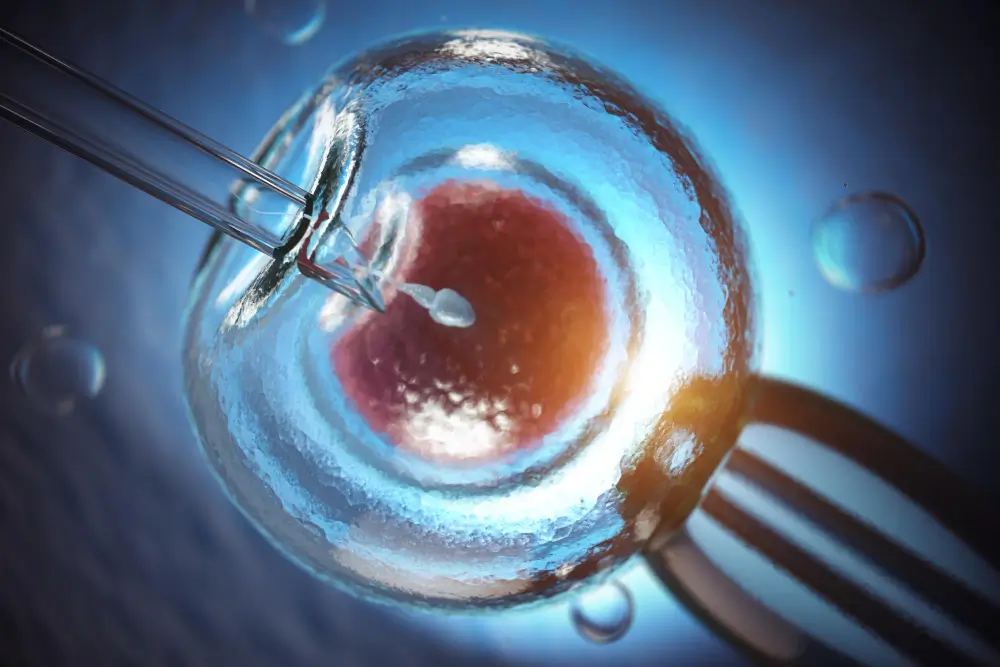
A Day-6 blastocyst is an embryo that reaches full expansion one day later than the standard Day-5 timeline. Day-6 blastocysts remain highly viable and are widely used in IVF, especially in frozen transfers. Success rates are only slightly lower than Day-5 blastocysts, and slower development usually reflects timing differences—not abnormality. EggDonors4All provides education only; all embryo culture and transfers are handled by licensed fertility clinics.
Reaches blastocyst on Day 6 instead of Day 5
Only slightly lower implantation success
Common in high-quality donor-egg cycles
Excellent candidates for frozen embryo transfer
Slower development ≠ poor embryo quality
Many families notice that some embryos become blastocysts on Day-5, while others do so on Day-6. This timing difference creates understandable questions:
Does Day-6 mean lower quality?
Are Day-6 embryos normal?
Should Day-6 embryos be used for transfer?
This guide explains the science behind Day-6 development and how fertility clinics interpret these embryos.
EggDonors4All provides only educational guidance; licensed IVF laboratories perform all clinical procedures.
A Day-6 blastocyst is an embryo that reaches:
on the sixth day after fertilization.
Some embryos simply need one more day to reach the same developmental milestones as Day-5 blastocysts.
⭐ Key point
A Day-6 blastocyst is still considered normal, and many result in healthy clinical pregnancies.

Embryo biology varies naturally.
Common reasons for slower development:
Natural developmental variability
Some embryos develop at a gentler pace despite having normal genetics.
Egg quality differences
Older eggs or eggs with weakened mitochondria may progress slightly slower.
Sperm DNA fragmentation
Higher fragmentation can delay blastulation timing.
Culture conditions
Embryos respond differently to laboratory media and oxygen levels
Chromosomal status
Day-6 embryos have a slightly higher chance of being aneuploid—
but many Day-6 blastocysts are perfectly healthy or euploid when tested.
Clinics report small but consistent differences:
Stage | Implantation Rate | Notes |
Day-5 Blastocyst | Highest | Naturally aligned with uterine window |
Day-6 Blastocyst | Slightly lower | Still strong in frozen transfers |
Why Day-6 performs well
Frozen embryo transfers (FET) allow clinics to precisely align the uterus to the embryo’s timeline, eliminating most timing disadvantages.
Why Day-5 retains a slight advantage
For fresh transfers, Day-5 embryos match uterine receptivity more closely.
No — a Day-6 timeline does not automatically indicate lower quality.
Embryologists assess quality based on:
Day-6 embryos often score very well.
PGT-A data shows:
Day-5 embryos have slightly higher euploid rates
Day-6 embryos still produce many normal embryos
Timing reflects pace, not necessarily genetic status
A slow-growing embryo can still be genetically normal.
The Day-5 embryos are of lower grade
The Day-6 embryo is euploid
The Day-5 embryos were used in prior transfers
Timing favors frozen transfer cycles
Many intended parents achieve healthy pregnancies from Day-6 embryos.
Day-6 embryos are often chosen when:
Many intended parents achieve healthy pregnancies from Day-6 embryos.

Fresh transfers depend on syncing:
But FET eliminates these constraints by allowing the uterus to be prepared exactly for the embryo’s developmental stage.
▶ This is why Day-6 embryos perform nearly as well as Day-5 in modern IVF.
Yes — even with excellent egg quality, 15–35% of normal embryos reach blastocyst on Day-6.
Why?
Day-6 embryos are standard and expected, even in top-performing donor cycles.
Most fertility specialists say no.
Why:
Strong success rates
High euploid potential
Excellent performance in frozen transfers
Many documented live births
Day-6 embryos are a normal part of IVF.

In Guaranteed Blastocysts programs:
Guaranteed Blastocysts Programs ensure predictable outcomes regardless of development timing.
Not necessarily—Day-6 embryos can implant and develop normally.
Slightly, but differences shrink in frozen transfers.
No—development varies naturally.
Yes—clinics routinely transfer Day-6 blastocysts.
No—all medical procedures are performed by licensed fertility clinics.
EggDonors4All offers donor matching, structured blastocyst-guarantee programs, and educational support. Licensed clinics perform all medical care.

Egg donation is a process where a woman (the egg donor) provides one or several eggs (also known as oocytes) for purposes of assisted reproduction, with the eggs being fertilized in the laboratory. Once fertilized, the resulting embryos are transferred to the recipient’s uterus to initiate a pregnancy, or they can be cryopreserved (frozen) for future use.
Licensed & Registered: NYS Surrogacy Program License GSP220903 · NYS Tissue Bank License ID 1570 · California Tissue Bank License CTB00082276 · Maryland Tissue Bank License TB3527 · FDA HCT/P Establishment Registration FEI 3021544308 · Health Canada Establishment Registration 000119
Verify: How to check our licenses
Disclaimer: THIS WEBSITE DOES NOT PROVIDE MEDICAL ADVICE AND MAY BE OUT OF DATE. The information, including but not limited to text, PDFs, graphics, images, and other material contained on this website, is for general educational purposes only. No material on this site is intended to be a substitute for professional medical advice, diagnosis, or treatment, and does not create a patient-doctor relationship. Pricing on the website may be out of date, is subject to change without notice, and may be subject to additional terms and conditions. No information on this site is intended to be a financial quote for medical services. Always seek the
advice of your physician or other qualified healthcare provider with any questions you may have regarding a medical condition, lifestyle or dietary changes, treatments, and before undertaking a new healthcare regimen.
Never disregard professional medical advice or delay in seeking it because of something you have read on this website.
© 2026 EggDonors4All. All Rights Reserved.