
A blastocyst is a Day-5 or Day-6 embryo containing a defined inner cell mass (future fetus), trophectoderm (future placenta), and a fluid cavity called the blastocoel. This glossary explains all major blastocyst-related terms used in IVF and biology. EggDonors4All provides educational guidance only; licensed fertility clinics perform all medical procedures.
Blastocyst forms on Day 5–6
Contains ICM + trophectoderm
Highest implantation potential
Precedes implantation and gastrulation
Definitions support both IVF and biology learners
This glossary provides clear, accurate definitions of all major terms related to the blastocyst stage. It is written for both intended parents navigating IVF and students learning human development.
EggDonors4All does not perform embryo creation or transfer; all medical procedures occur at licensed fertility clinics.
Common biological factors:
Blastulation
The process by which the morula becomes a blastocyst through:
Blastocoel
A fluid-filled cavity that expands the blastocyst and helps it hatch.
Inner Cell Mass (ICM)
A cluster of cells inside the blastocyst that becomes the fetus.
Graded during IVF (A, B, C).
Trophectoderm (TE)
Outer cell layer that becomes the placenta.
Used for PGT-A biopsy in IVF.
Zona Pellucida
A protective shell around the egg and embryo.
The blastocyst must “hatch” from it before implantation.
Zygote
A single fertilized cell.
Has the fewest cells of all embryo stages.
Cleavage Stage
Day 2–3 embryo dividing into 2, 4, 8 cells.
Morula
A compact ball of cells formed on Day-4 before blastulation.
Gastrula / Gastrulation
Occurs after implantation, when the embryo forms germ layers (ectoderm, mesoderm, endoderm).
This is when the blastocyst officially becomes an embryo of pregnancy.
Hatching
The process where the expanding blastocyst breaks through the zona pellucida to prepare for implantation.
ICM Grade (A/B/C)
A = tightly packed, ideal
B = average
C = poorly defined
TE Grade (A/B/C)
A = cohesive cells
B = moderately cohesive
C = sparse cells
Blastula vs Blastocyst
Blastula = early animal embryo
Blastocyst = human version with ICM + TE
Morula vs Blastocyst
Morula = compact ball of cells
Blastocyst = differentiated, expanded structure
Zygote → Morula → Blastocyst
A standard developmental sequence used in textbooks and IVF.
Blastocyst vs Embryo
Blastocyst = pre-implantation
Embryo = post-implantation (gastrulation)
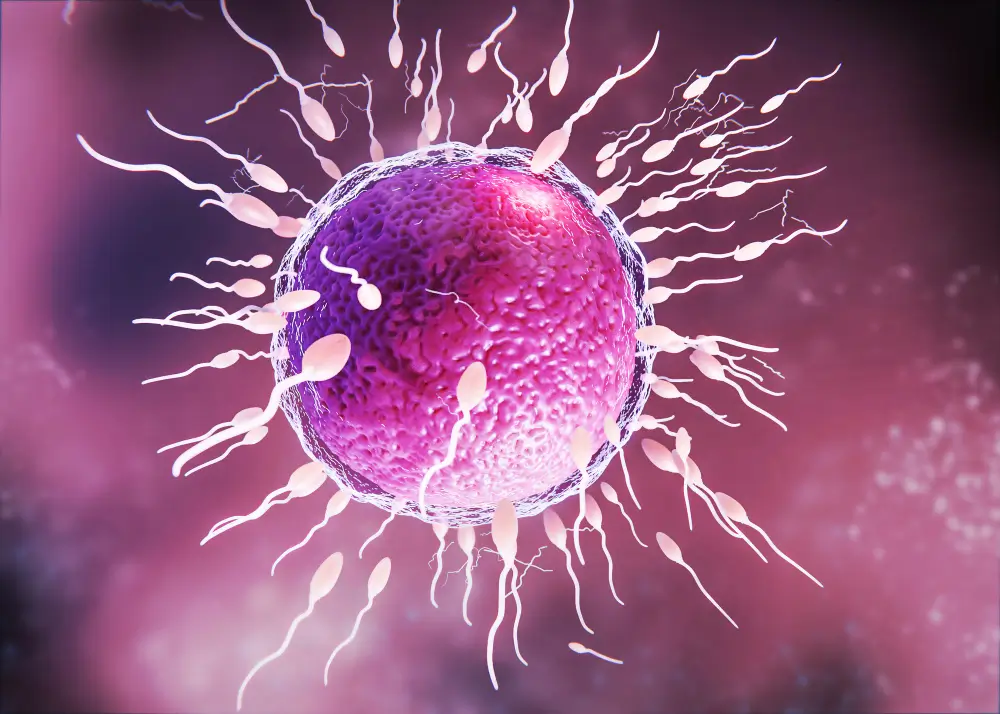
The zygote — it is a single cell.
Inner cells → fetus
Outer cells → placenta
About 40–60% depending on egg age.
Blastocyst = ICM + TE + cavity
Gastrula = germ-layer formation after implantation
No—only licensed fertility clinics handle medical and laboratory processes.

Blastocyst terminology is used by clinics to:
Guaranteed Blastocyst Programs rely on these definitions to set clear expectations for families.
EggDonors4All offers donor matching, structured embryo-outcome programs, and educational support throughout your journey.

Egg donation is a process where a woman (the egg donor) provides one or several eggs (also known as oocytes) for purposes of assisted reproduction, with the eggs being fertilized in the laboratory. Once fertilized, the resulting embryos are transferred to the recipient’s uterus to initiate a pregnancy, or they can be cryopreserved (frozen) for future use.
Licensed & Registered: NYS Surrogacy Program License GSP220903 · NYS Tissue Bank License ID 1570 · California Tissue Bank License CTB00082276 · Maryland Tissue Bank License TB3527 · FDA HCT/P Establishment Registration FEI 3021544308 · Health Canada Establishment Registration 000119
Verify: How to check our licenses
Disclaimer: THIS WEBSITE DOES NOT PROVIDE MEDICAL ADVICE AND MAY BE OUT OF DATE. The information, including but not limited to text, PDFs, graphics, images, and other material contained on this website, is for general educational purposes only. No material on this site is intended to be a substitute for professional medical advice, diagnosis, or treatment, and does not create a patient-doctor relationship. Pricing on the website may be out of date, is subject to change without notice, and may be subject to additional terms and conditions. No information on this site is intended to be a financial quote for medical services. Always seek the
advice of your physician or other qualified healthcare provider with any questions you may have regarding a medical condition, lifestyle or dietary changes, treatments, and before undertaking a new healthcare regimen.
Never disregard professional medical advice or delay in seeking it because of something you have read on this website.
© 2026 EggDonors4All. All Rights Reserved.