
AI SMART SUMMARY
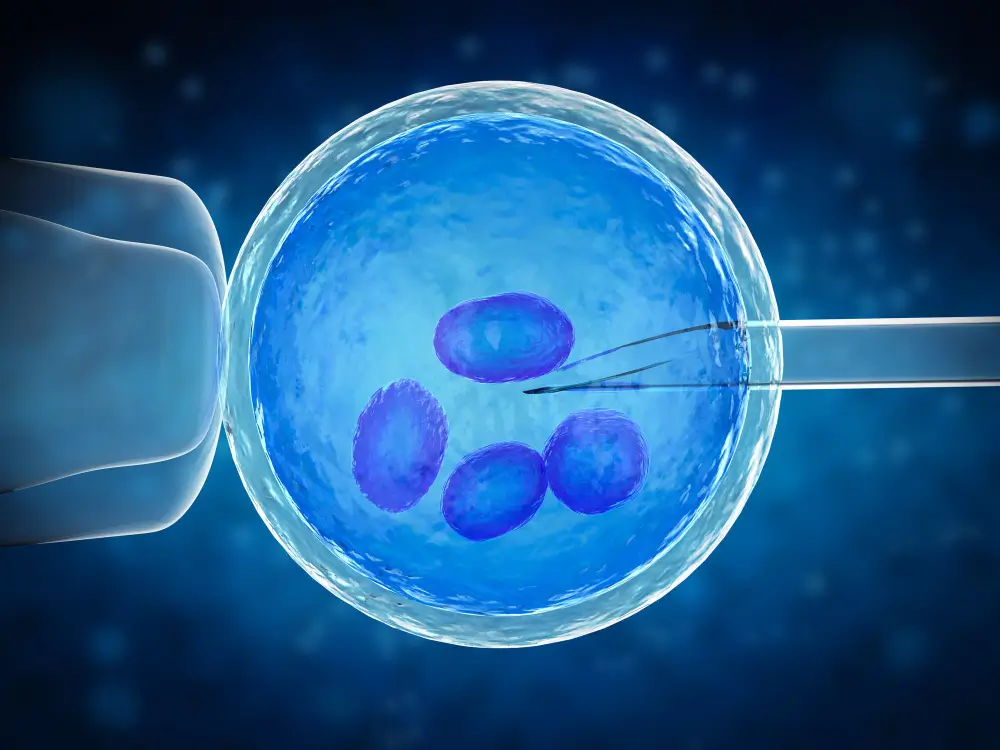
A blastocyst is a Day-5 or Day-6 human embryo composed of an inner cell mass (future fetus), a trophectoderm layer (future placenta), and a fluid-filled cavity. This developmental stage allows clearer evaluation compared to earlier embryos and is essential in IVF, donor-egg cycles, and embryo freezing.
All embryo creation, culture, grading, testing, and transfer procedures are performed by licensed fertility clinics. EggDonors4All provides education and coordination support only.
Key Points:
- Day-5 or Day-6 embryo with approximately 100–200+ cells
- Contains Inner Cell Mass (ICM), Trophectoderm (TE), and blastocoel
- Critical stage before implantation
- Widely used in IVF and PGT testing
- EggDonors4All provides education, not medical care
The term blastocyst is used in biology, human development, and IVF treatment. For intended parents, egg donors, and students, understanding what a blastocyst is helps clarify embryo development and provides essential context for fertility care.
EggDonors4All offers educational support and donor-matching programs. All clinical and laboratory procedures are conducted exclusively by licensed fertility clinics.
What Is a Blastocyst?
A blastocyst is a Day-5 or Day-6 embryo that has grown to approximately 100–200+ cells and developed distinct structures:
- Inner Cell Mass (ICM) — develops into the fetus
- Trophectoderm (TE) — develops into the placenta
- Blastocoel — a fluid cavity that allows expansion
- Zona Pellucida — the protective outer shell the embryo later “hatches” from
This stage occurs naturally in the body and in IVF laboratories.
Scientific Definition of a Blastocyst (Biology)
In biology, a blastocyst is the pre-implantation embryonic structure formed after the morula stage. It is characterized by:
- Cavitation
- Cellular differentiation
- Polarity
- Early axis formation
This stage marks the transition from simple cleavage divisions to organized embryonic development.
Anatomy of a Blastocyst (ICM, TE, Blastocoel)
Inner Cell Mass (ICM)
A compact cluster of cells that will eventually form fetal tissues.
Trophectoderm (TE)
A layer of flattened cells surrounding the blastocyst that forms the placenta and supportive structures.
Blastocoel
The fluid-filled cavity that expands as development progresses.
Zona Pellucida
A protective membrane that the blastocyst must hatch from before implantation can occur.
Blastocyst in IVF: Why This Stage Matters
Blastocysts offer important advantages in assisted reproduction:
Embryo Selection
Embryologists can better evaluate embryo structure and development.
Frozen Embryo Transfer Synchronization
Most modern transfers use Day-5 or Day-6 blastocysts.
PGT-A Testing
Chromosomal testing is typically performed at the blastocyst stage.
Surrogacy Planning
Embryos are often ready and frozen before matching with a surrogate.
Blastocyst vs. Other Embryo Stages
| Stage | Day | Description |
|---|---|---|
| Zygote | Day 1 | Single cell with pronuclei |
| Cleavage Embryo | Day 2–3 | 2–8 cells |
| Morula | Day 4 | Compact ball of cells |
| Blastocyst | Day 5–6 | Differentiated, expanded embryo |
Common Academic Questions About Blastocysts
Which stage has the fewest cells?
- Zygote → 1 cell
- Cleavage embryo → 2–8 cells
- Morula → 16–32 cells
- Blastocyst → 100–200+ cells
Is a blastocyst the same as a blastula?
In human development:
- Blastocyst is the preferred term.
- Blastula is an earlier evolutionary comparative term used more broadly in biology.
What happens after the blastocyst stage?
- Implantation → Gastrulation → Embryo differentiation
Blastocyst in Donor-Egg IVF
Donor eggs often produce strong blastocysts due to:
- Younger egg age
- More predictable genetics
- Stable cell division patterns
This supports:
- Improved embryo yield
- Higher frozen blastocyst availability
- Better planning for surrogacy and international IVF
Guaranteed Blastocysts
EggDonors4All offers structured programs in which a minimum number of blastocysts is guaranteed before transfer planning begins.
These programs support families who want:
- More predictable outcomes
- Fewer repeated donor cycles
- Earlier clarity in IVF planning
- Greater control in surrogacy timelines
FAQ
Q. Is a blastocyst an embryo?
Ans. Yes. A blastocyst is an embryo at a more advanced developmental stage.
Q. How many cells are in a blastocyst?
Ans. Approximately 100–200+ cells.
Q. When does a blastocyst implant?
Ans. After hatching from the zona pellucida.
Q. Does EggDonors4All grow embryos?
Ans. No. All medical and laboratory procedures are performed by licensed fertility clinics.
Need help understanding blastocysts or donor-egg IVF?
EggDonors4All provides transparent education, donor matching, and structured embryo-outcome programs such as Guaranteed Blastocysts—while licensed fertility clinics handle all medical care.
- Explore Guaranteed Blastocysts
- Request Donor Information
- Become an Egg Donor

Dr. Veera Saghar
As an Egg Donor Coordinator, she plays a critical role in our company. Her background as a medical graduate from ISRA UNIVERSITY in Pakistan provides us with a solid foundation in the medical sciences. She has seven years of clinical experience practicing in the USA. This has given her firsthand experience when collaborating with patients and their families.
She is responsible for managing the process of egg donation from start to finish. We identify and screen potential egg donors.
- Dr. Veera Saghar

- Dr. Veera Saghar
- Dr. Veera Saghar
- Dr. Veera Saghar