AI SMART SUMMARY
A blastocyst becomes an embryo after implantation begins—when the inner cell mass reorganizes and early body structures start forming during gastrulation. Before implantation, a blastocyst is a pre-implantation structure containing the inner cell mass and trophectoderm. Implantation success varies by developmental stage: Day-5 blastocysts generally implant more successfully than earlier embryos.
EggDonors4All provides education and coordination; all embryo culture, transfer, and medical care are performed exclusively by licensed IVF clinics.
Key Points:
- Transition occurs after implantation
- Gastrulation = formation of early body layers
- Blastocyst = pre-implantation stage
- Embryo = post-implantation developmental stage
- Day-5 embryos implant more often than Day-1 or Day-3 embryos
- Licensed clinics oversee all transfer and implantation procedures
Families often ask: When does a blastocyst officially become an embryo?
Although the terms are related, they describe different stages of early human development. Understanding this transition helps intended parents better interpret IVF reports, embryo grading, and implantation timing.
EggDonors4All provides educational guidance and donor coordination, while all fertilization, embryo culture, transfer, and pregnancy care are performed by licensed fertility clinics.
What Is a Blastocyst? (Before It Becomes an Embryo)
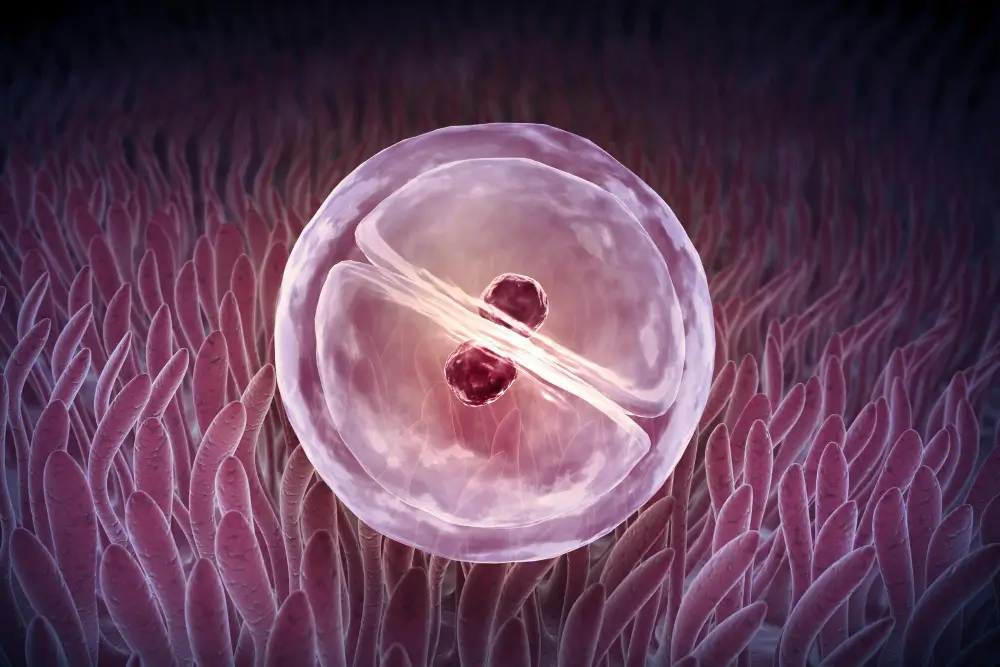
A blastocyst is a Day-5 or Day-6 developmental structure composed of:
- Inner Cell Mass (ICM) → develops into the fetus
- Trophectoderm (TE) → develops into the placenta
- Blastocoel → fluid-filled cavity
- Zona pellucida → protective outer shell
At this stage, it is considered a pre-implantation embryo, meaning pregnancy has not yet begun.
When Does a Blastocyst Officially Become an Embryo?
A blastocyst becomes an embryo after implantation begins.
Once the blastocyst attaches to the uterine lining, the inner cell mass reorganizes into early body layers during a biological process called gastrulation.
During gastrulation:
-
The three germ layers form:
- Ectoderm
- Mesoderm
- Endoderm
- The primitive streak appears
- Early head-to-tail body orientation develops
Summary:
- Before implantation → Blastocyst
- After implantation → Embryo
Timeline of the Transition (Natural & IVF Context)
Natural Development Timeline
- Day 0 — Fertilization
- Day 1–3 — Cleavage stage
- Day 4 — Morula
- Day 5–6 — Blastocyst
- Day 6–10 — Implantation
- Day 10–14 — Gastrulation → embryo stage
IVF Timeline
In frozen embryo transfer (FET):
- Implantation typically occurs 2–4 days after transfer
- Clinics synchronize the uterine lining to match Day-5 or Day-6 embryo development
Implantation Success Rates: Day-1 Through Day-6 Embryos
Implantation likelihood varies by developmental stage. Below is a commonly observed IVF trend (illustrative averages):
| Embryo Stage | Approx. Implantation Rate | Why |
|---|---|---|
| Day-1 (Zygote) | ~10% | Very early stage; minimal differentiation |
| Day-3 Embryo | ~25% | Growing but lacks defined ICM/TE structure |
| Day-5 Blastocyst | ~50% | Fully formed structure aligned with uterine timing |
| Day-6 Blastocyst | ~45% | Strong viability; slightly slower development |
Actual results vary based on patient biology, uterine receptivity, embryo quality, and clinic protocol.
Graph: Implantation Success Rates by Embryo Stage (Day-1 → Day-6)
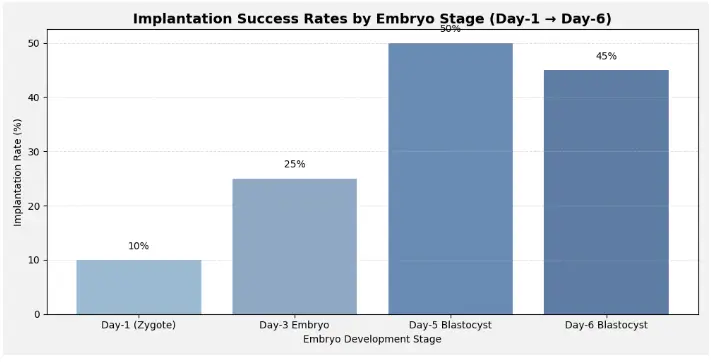
Figure: Illustrative implantation-rate comparison. Blastocysts (Day-5/6) implant more consistently due to structural development and alignment with uterine timing.
Why Implantation Improves at the Blastocyst Stage
1. Clear Structural Differentiation
Blastocysts reveal:
- Inner Cell Mass (future fetus)
- Trophectoderm (future placenta)
- Expansion grade
- Hatching status
Earlier embryos lack this structural clarity.
2. Synchronization With the Uterus
The uterus becomes receptive approximately Day 6–10 after ovulation. Blastocysts naturally align with this implantation window.
3. Developmental Checkpoints
To reach blastocyst stage, embryos must successfully complete:
- Chromosomal alignment
- Compaction
- Blastocoel expansion
Embryos reaching Day-5/6 have passed multiple biological quality filters.
Why Day-6 Blastocysts Implant Slightly Less Often Than Day-5
Day-6 embryos are not inferior, but:
- They expand slightly more slowly
- Some may not be fully hatched at transfer
- Uterine synchronization must be carefully managed
Frozen embryo transfer (FET) helps optimize this timing.
Clinical Language vs. Biological Language
In clinical settings, the word “embryo” is often used broadly.
However:
- Blastocyst = specific pre-implantation structure
- Embryo = post-implantation developmental stage
They represent different points along the same developmental pathway.
Guaranteed Blastocysts Programs
Families seeking greater predictability sometimes choose Guaranteed Blastocysts Programs, which:
- Define a minimum number of blastocysts
- Reduce early-cycle uncertainty
- Support surrogacy scheduling
- Help avoid repeated donor cycles
- Provide clearer expectations before transfer
EggDonors4All coordinates these structured programs. All embryology, laboratory processes, embryo transfers, and pregnancy care are performed by licensed fertility clinics.
Frequently Asked Questions
Q. Is a blastocyst an embryo?
Ans. It is a pre-implantation embryo, not yet the embryo of pregnancy.
Q. What marks the transition?
Ans. Implantation followed by gastrulation.
Q. Do Day-6 embryos work?
Ans. Yes. Day-6 embryos perform similarly in frozen transfer cycles.
Q. Are early-stage embryos harder to predict?
Ans. Yes, because they lack visible structural differentiation.
Q. Does EggDonors4All perform medical procedures?
Ans. No. All medical care and laboratory work are performed by licensed fertility clinics.
Need clarity about embryo development or planning donor-egg IVF?
EggDonors4All provides donor matching, structured embryo-outcome programs, and educational guidance—while licensed fertility clinics manage all medical and laboratory procedures.
- Explore Guaranteed Blastocysts
- Request Donor Information
- Become an Egg Donor

Dr. Veera Saghar
As an Egg Donor Coordinator, she plays a critical role in our company. Her background as a medical graduate from ISRA UNIVERSITY in Pakistan provides us with a solid foundation in the medical sciences. She has seven years of clinical experience practicing in the USA. This has given her firsthand experience when collaborating with patients and their families.
She is responsible for managing the process of egg donation from start to finish. We identify and screen potential egg donors.
- Dr. Veera Saghar

- Dr. Veera Saghar
- Dr. Veera Saghar
- Dr. Veera Saghar