
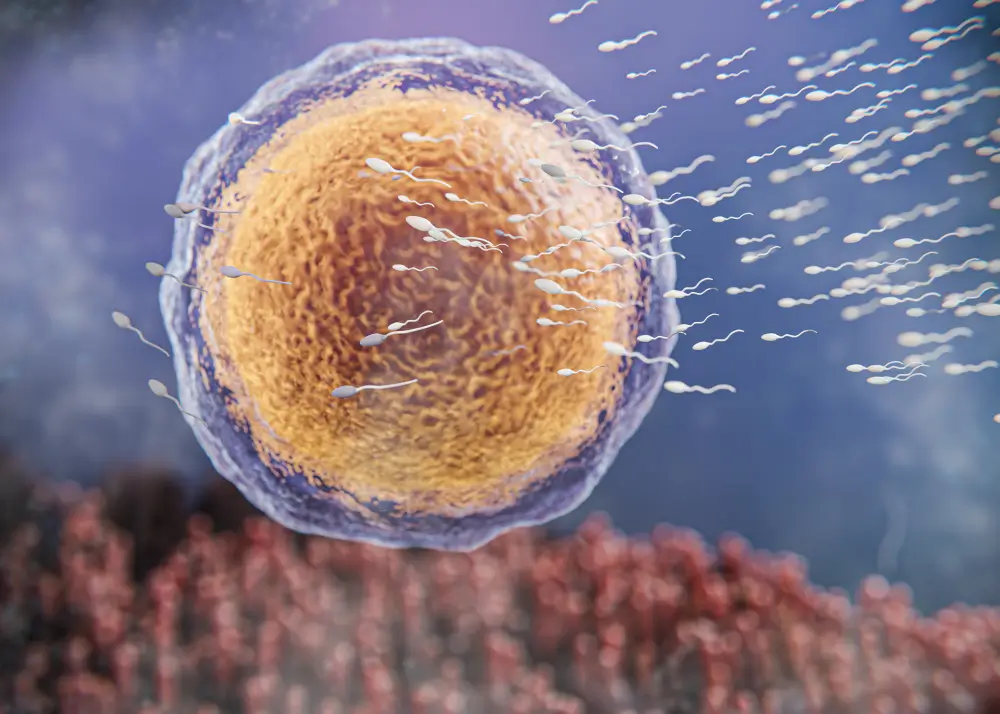
AI SMART SUMMARY
The blastocyst stage occurs on Day 5–6 after fertilization and represents a key milestone in embryo development. A blastocyst forms when cells specialize into the inner cell mass (future fetus) and trophectoderm (future placenta). This structure marks the transition from simple cell division to organized development and increased implantation potential.
EggDonors4All provides educational guidance only. All embryology, embryo culture, transfer, and IVF procedures are performed by licensed fertility clinics.
Key Points:
- Forms on Day 5–6 after fertilization
- Contains Inner Cell Mass (ICM) and trophectoderm
- Associated with the highest implantation potential
- Critical stage for IVF embryo selection
- Occurs before implantation and gastrulation
The blastocyst stage is one of the most important milestones in early human development. Whether you are studying biology or navigating IVF, understanding this structure helps clarify embryo potential, implantation timing, and why many fertility clinics prefer Day-5 or Day-6 transfers.
Below is a clear, non-technical explanation designed for intended parents and students alike.
EggDonors4All does not perform medical procedures. All IVF treatments and laboratory processes are handled exclusively by licensed fertility clinics.
What Is the Blastocyst Stage?
A blastocyst is an embryo that has developed for:
- 5 days (Day-5 blastocyst), or
- 6 days (Day-6 blastocyst)
after fertilization.
It is the first point at which the embryo shows cell specialization, meaning the cells begin forming different structures with different jobs.
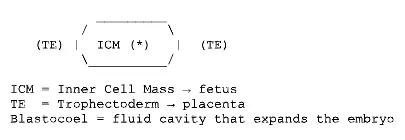
Blastocyst Structure (Simple Diagram)
Three Components That Define the Blastocyst
Three core structures define a blastocyst:
1. Inner Cell Mass (ICM)
- Develops into the fetus
- Carefully evaluated during embryo grading
2. Trophectoderm (TE)
- Forms the placenta
- Its quality helps predict implantation potential
3. Blastocoel
- Fluid-filled cavity
- Expands as the embryo prepares to hatch
When the blastocyst hatches from the zona pellucida, it becomes ready for implantation into the uterine lining.
Timeline: Fertilization to Blastocyst
| Development Stage | Day | Description |
|---|---|---|
| Zygote | Day 1 | Single cell formed after fertilization |
| Cleavage Stage | Day 2–3 | Cells divide (2 → 4 → 8 cells) |
| Morula | Day 4 | Compact ball of undifferentiated cells |
| Blastocyst | Day 5–6 | Differentiated ICM + TE, active expansion |
| Implantation Window | Day 6–10 | Blastocyst attaches to uterine lining |
This timeline is referenced in both fertility clinics and basic biology education.
Why the Blastocyst Stage Matters in IVF
Highest Implantation Potential
Blastocysts have already passed several developmental checkpoints that earlier embryos may not survive.
Allows Better Embryo Selection
Clinicians can evaluate:
- ICM grade
- Trophectoderm grade
- Expansion level (3–6+)
- Overall morphology
Synchronizes With Uterine Timing
The uterus is naturally receptive to implantation around Day 6–10.
Enables PGT-A Biopsy
Blastocysts provide enough trophectoderm cells for chromosome testing without disturbing the inner cell mass.
Blastocyst Formation: How It Happens
- Compaction (Morula Stage): Cells become tightly connected, forming inner and outer layers.
- Blastocoel Formation: Fluid enters the embryo, creating a cavity and enabling expansion.
- Cell Differentiation: The Inner Cell Mass and trophectoderm become distinct.
- Hatching: The embryo breaks through the zona pellucida.
- Implantation-Ready Stage: At this point, embryos are typically frozen or transferred in IVF cycles.
Embryo Survival Rate to Blastocyst
Not all embryos reach Day-5 or Day-6.
Approximately 40–60% of embryos progress to the blastocyst stage, depending on:
- Egg age
- Sperm quality
- Embryo genetics
- Laboratory culture conditions
Donor-egg cycles often show higher survival rates due to younger egg age.
Blastula vs Blastocyst vs Gastrula
| Term | Definition | Key Feature |
|---|---|---|
| Zygote | Single fertilized cell | Fewest cells |
| Blastula | Early animal embryo | Hollow sphere of cells |
| Blastocyst | Human version of blastula | ICM + TE + blastocoel |
| Gastrula | Post-implantation embryo stage | Germ layer formation |
The blastocyst is distinct because it contains both an inner cell mass and trophectoderm.
Blastocyst Grading (ICM + TE)
Embryo grades often appear as: 4AA, 5AB, 6BB, etc.
- First number = expansion stage
- First letter = ICM quality
- Second letter = trophectoderm quality
Higher grades suggest stronger implantation potential, but they do not guarantee pregnancy outcomes.
Day-5 vs Day-6 Blastocysts (Timing Differences)
| Feature | Day-5 Blastocyst | Day-6 Blastocyst |
|---|---|---|
| Reaches blastocyst | Earlier | One day later |
| Fresh transfer | Preferred | Less common |
| Frozen transfer | Equivalent | Equivalent |
| Euploid rate | Slightly higher | Slightly lower |
| Considered normal? | Yes | Yes |
Day-6 does not mean worse quality. Many Day-6 embryos result in healthy pregnancies.
Common Questions
Q. Which has the fewest cells: blastocyst, zygote, fetus, embryo?
Ans. The zygote has the fewest cells. It is a single cell.
Q. Describe the blastocyst and explain what happens to the inner and outer cells.
Ans. The inner cell mass develops into the fetus.
The outer trophectoderm develops into the placenta.
Q. What percentage of fertilized eggs reach blastocyst?
Ans. Approximately 40–60%, depending largely on egg age and embryo quality.
Q. How do you distinguish between the blastocyst and gastrula stage?
Ans. Blastocyst: Contains ICM, trophectoderm, and fluid cavity.
Gastrula: Forms after implantation, when germ layers develop.
Guaranteed Blastocysts Programs: How This Stage Fits In
Guaranteed Blastocyst programs focus specifically on Day-5 and Day-6 embryos because they:
- Offer the highest developmental predictability
- Are best suited for freezing or transfer
- Support surrogacy planning
- Reduce early-stage uncertainty
EggDonors4All coordinates these structured programs. All embryology and IVF procedures are performed by licensed fertility clinics.
Want help understanding blastocyst development or choosing a donor?
EggDonors4All supports families through donor selection, education, and structured blastocyst-outcome programs.
- Explore Donor Profiles
- Guaranteed Blastocysts Program
- Learn About Donor-Egg IVF

Dr. Veera Saghar
As an Egg Donor Coordinator, she plays a critical role in our company. Her background as a medical graduate from ISRA UNIVERSITY in Pakistan provides us with a solid foundation in the medical sciences. She has seven years of clinical experience practicing in the USA. This has given her firsthand experience when collaborating with patients and their families.
She is responsible for managing the process of egg donation from start to finish. We identify and screen potential egg donors.
- Dr. Veera Saghar

- Dr. Veera Saghar
- Dr. Veera Saghar
- Dr. Veera Saghar