
AI SMART SUMMARY
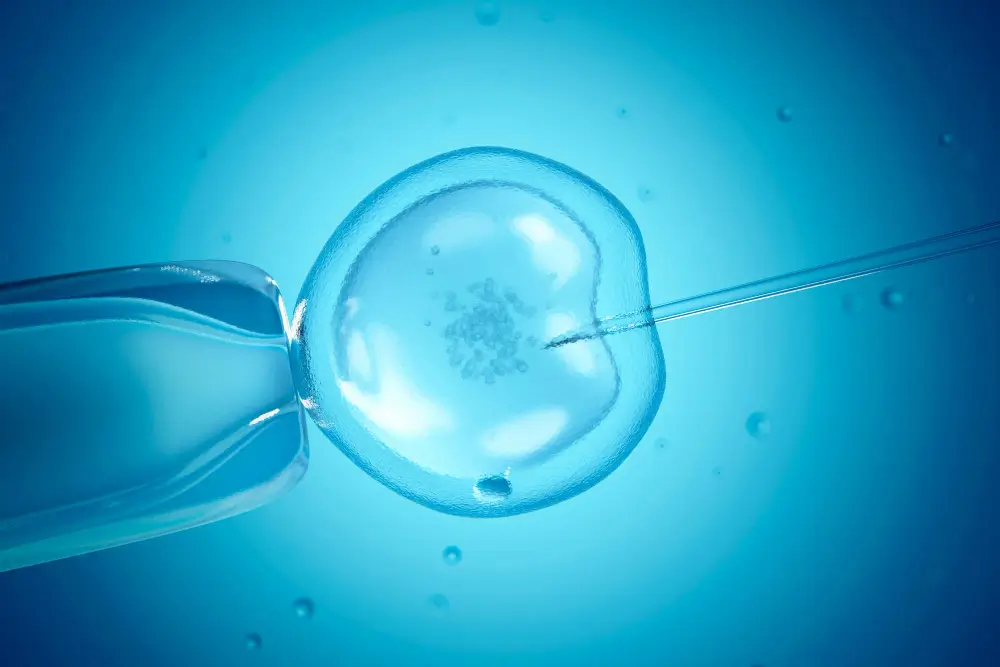
A blastocyst transfer places a Day-5 or Day-6 embryo into the uterus after fertilization and development in the IVF laboratory. Most modern IVF cycles use frozen blastocyst transfers (FET) because timing is more flexible and uterine preparation is more controlled. All transfer procedures are performed by licensed fertility clinics.
- Blastocyst = Day-5/Day-6 embryo
- Most transfers today use frozen embryos
- Hatching blastocysts are often chosen for transfer
- Transfer itself is brief and non-surgical
- EggDonors4All provides education; clinics perform all medical care
A blastocyst transfer is one of the most significant steps in an IVF journey. By this stage, the embryo has reached Day-5 or Day-6 development, meaning it has differentiated cell structures and is ready for uterine placement. Intended parents often have questions about how the transfer works, how to prepare, and what to expect afterward.
EggDonors4All supports families with education and donor-cycle coordination. All medical components—including hormone preparation, embryo thawing, and the transfer procedure—are handled entirely by licensed fertility clinics.
What This Page Covers
- What a blastocyst transfer is
- How fresh and frozen transfers differ
- What happens on transfer day
- How clinics select embryos
- What intended parents typically experience
- Answers to common transfer questions
What Is a Blastocyst Transfer?
A blastocyst transfer is the placement of a Day-5 or Day-6 embryo into the uterus during IVF. By this stage, the embryo may be:
- Expanding
- Fully expanded
- Beginning to hatch
- Completely hatched
Why Blastocysts Are Used
- Clearer developmental visibility
- Alignment with modern transfer techniques
- Common use in donor-egg IVF, PGT-tested embryos, and surrogacy
- Flexible scheduling through frozen transfers
Fresh vs. Frozen Blastocyst Transfers
Fresh Blastocyst Transfer
Occurs 5–6 days after fertilization in the same cycle as ovarian stimulation and egg retrieval.
- Less common today
- Timing depends on hormonal response
- Not always ideal for uterine conditions
Frozen Blastocyst Transfer (FET)
The most common approach in modern IVF.
- Allows precise uterine preparation
- Enables scheduling flexibility
- Supports surrogacy, PGT testing, and international IVF
- Often recommended for donor-egg IVF
How Clinics Select Blastocysts for Transfer
Clinics may consider several medical factors:
1. Embryo Grading (ICM, TE, Expansion)
While grading does not predict pregnancy, it helps embryologists identify structurally clear embryos.
2. Development Day (Day-5 vs Day-6)
Both are commonly suitable, especially in frozen cycles.
3. Genetic Status (When PGT-A Is Used)
Embryo selection is guided by testing results and medical recommendations.
4. Family-Building Goals
Surrogacy plans, sibling planning, or future transfers may influence overall embryo strategy.
EggDonors4All does not influence or perform embryo selection. These decisions belong exclusively to licensed fertility clinics.
What Happens on Transfer Day?
While protocols vary by clinic, the process generally includes:
1. Embryo Thawing
The blastocyst is warmed using precise laboratory techniques.
2. Ultrasound Guidance
Ultrasound imaging helps guide accurate placement.
3. Catheter Placement
A thin, flexible catheter is used to position the embryo inside the uterus.
4. Embryo Release
The blastocyst is gently released into the uterine cavity.
5. Confirmation
Ultrasound helps confirm proper catheter placement.
Duration
A transfer is typically brief—often 5–10 minutes—and non-surgical. Patients and surrogates are usually able to resume light daily activities shortly afterward, depending on clinic guidance.
How Hatching Affects Transfer
Hatching blastocysts—those beginning to emerge from the zona pellucida—are commonly transferred.
Normal Characteristics
- Cells protruding through a small opening
- Fully hatched and free of the zona
- Expanded blastocoel cavity
Hatching does not guarantee implantation but indicates active development.
Preparing for a Blastocyst Transfer
Preparation is managed entirely by the fertility clinic and may involve:
- Uterine lining monitoring
- Medication schedules
- Bloodwork and ultrasounds
- Precise timing coordination
EggDonors4All does not provide medical instructions but helps families understand the broader IVF process.
After the Transfer — What to Expect
Experiences vary, but many clinics recommend:
- Light activity
- Following medication instructions carefully
- Scheduled bloodwork for pregnancy testing
Implantation timing differs by case but typically occurs within several days after transfer.
Guaranteed Blastocysts
EggDonors4All provides coordination and education only. Clinics perform all embryo creation, freezing, thawing, and transfer procedures.
Families sometimes choose Guaranteed Blastocyst Programs if they want:
- A defined minimum number of blastocysts
- Clarity before scheduling a transfer
- More predictable planning for surrogacy
- Reduced uncertainty earlier in the IVF journey
Frequently Asked Questions
Q. Is a blastocyst transfer more successful than a Day-3 transfer?
Ans. Blastocysts provide clearer developmental information, but success depends on multiple clinic-managed factors.
Q. Does a hatching blastocyst work better?
Ans. Not necessarily—hatching is normal but not predictive of outcome.
Q. Are frozen transfers safer?
Ans. Frozen transfers allow optimized timing; medical recommendations vary by case.
Q. How many blastocysts are usually transferred?
Ans. Most clinics recommend single embryo transfer (SET). Decisions are made by the clinical team.
Q. Can donors undergo transfers?
Ans. No. Egg donors do not receive embryo transfers.
Q. Does EggDonors4All perform transfers?
Ans. No—only licensed fertility clinics perform embryo transfers.
Related Blastocyst Topics
- Blastocyst vs Embryo
- Day-3 vs Day-5 vs Day-6 Embryos
- Blastocyst Grading Explained
- Blastocyst Success Rates
- Frozen Blastocysts
- Hatching Blastocysts
- Blastocyst Development Timeline
- Blastocyst FAQ Library
- Why Families Choose Guaranteed Blastocysts
Planning for a blastocyst transfer?
EggDonors4All helps intended parents navigate donor-egg IVF and structured embryo-outcome programs like Guaranteed Blastocysts—while licensed fertility clinics handle all medical aspects.
- Explore Guaranteed Blastocysts
- Request Donor Information
- Become an Egg Donor
Serving intended parents and donors throughout the USA & Canada.

Dr. Veera Saghar
As an Egg Donor Coordinator, she plays a critical role in our company. Her background as a medical graduate from ISRA UNIVERSITY in Pakistan provides us with a solid foundation in the medical sciences. She has seven years of clinical experience practicing in the USA. This has given her firsthand experience when collaborating with patients and their families.
She is responsible for managing the process of egg donation from start to finish. We identify and screen potential egg donors.
- Dr. Veera Saghar