
AI SMART SUMMARY
A hatching blastocyst is a Day-5 or Day-6 embryo beginning to break out of its protective shell (zona pellucida) before implantation. Hatching is a normal developmental milestone and may occur before freezing, after thawing, or shortly before transfer. All medical care—including freezing, biopsy, assisted hatching, and embryo transfer—is handled exclusively by licensed fertility clinics.
- Hatching = embryo emerging from zona pellucida
- Normal part of Day-5/Day-6 development
- Seen in both fresh and frozen embryos
- Not a guarantee of implantation
- EggDonors4All provides education; clinics manage all embryology
“Hatching blastocyst” is one of the most common terms intended parents encounter when receiving embryo photos or updates from their fertility clinic. For donors, understanding this stage helps explain how embryos progress after retrieval and fertilization.
Hatching simply means the embryo is preparing for implantation—but it does not indicate or predict whether pregnancy will occur.
EggDonors4All supports intended parents and donors with education and program coordination. All medical procedures, including cryopreservation, biopsy, assisted hatching, and embryo transfer, are performed exclusively by licensed fertility clinics.
What This Page Covers
- What a hatching blastocyst is
- Why embryos hatch
- When hatching typically occurs
- What embryologists look for
- What hatching does not indicate
- Hatching in frozen vs fresh embryos
What Is a Hatching Blastocyst?
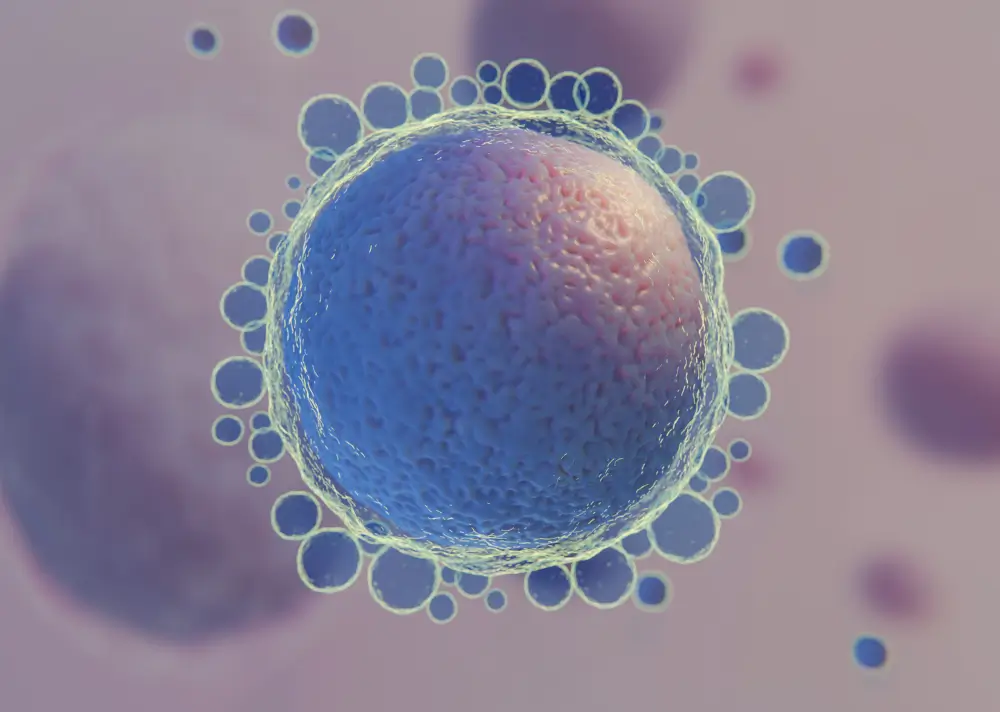
A hatching blastocyst is a developing embryo that has begun escaping from its outer shell, the zona pellucida. This step is required before implantation in the uterus can occur.
The Hatching Process
- The blastocoel (fluid cavity) expands
- Internal pressure increases
- The zona pellucida begins to thin
- A small opening forms
- Cells start to emerge
This phenomenon is natural, expected, and observed across mammals—including humans.
Stages of Hatching
Embryologists typically observe three visible stages:
1. Early Hatching
A small break appears in the zona; a few cells may protrude.
2. Partial Hatching
More cells push through the opening, while part of the embryo remains inside the shell.
3. Fully Hatched Blastocyst
The embryo has completely escaped the zona pellucida and is now free of its outer shell.
Why Do Blastocysts Hatch?
Hatching is necessary for implantation.
The zona pellucida must be shed so the embryo can:
- Attach to the uterine lining
- Begin the implantation process
- Interact directly with maternal tissue
Without hatching, implantation cannot occur.
Is Hatching a Sign of High Quality?
Not necessarily.
What Hatching Does Mean
- The embryo is progressing through normal development
- Expansion is occurring
- The zona has thinned enough to allow emergence
What Hatching Does Not Mean
- It does not guarantee pregnancy
- It does not confirm chromosomal normalcy
- It does not predict transfer success
Hatching is simply one milestone in the developmental process.
Hatching in Frozen Blastocysts
Hatching can occur:
- Before freezing
- After thawing
- Immediately before transfer
Sometimes blastocysts appear more expanded—or partially hatched—after thawing due to natural changes during the warming process.
Assisted Hatching (Performed Only by Clinics)
Some fertility clinics may perform “assisted hatching,” a laboratory technique that creates a small opening in the zona pellucida prior to transfer.
Important: EggDonors4All does not perform or advise on medical procedures. Assisted hatching decisions are made exclusively by the treating fertility clinic.
Hatching Blastocysts in Donor-Egg IVF
Hatching is commonly observed in donor-egg cycles because:
- Donor eggs often produce strong blastocysts
- Embryos are frequently cultured to Day-5 or Day-6
- Higher-expansion blastocysts may naturally begin hatching
Intended parents may receive embryo photos described as:
- “Expanded”
- “Bursting”
- “Escaping”
All of these are normal developmental descriptions.
Guaranteed Blastocysts
EggDonors4All provides donor matching and program coordination; clinics provide all embryology and transfer care.
Guaranteed Blastocyst Programs may appeal to intended parents who want:
- Clarity on the number of blastocysts before planning transfers
- Defined embryo outcomes
- Structured preparation for surrogacy or international IVF
- Reduced uncertainty earlier in the IVF journey
Frequently Asked Questions
Q. Is a hatching blastocyst better than a non-hatching one?
Ans. Not necessarily—both can implant successfully.
Q. Does hatching guarantee pregnancy?
Ans. No. It is a normal developmental step, not a predictor of outcome.
Q. Can Day-6 embryos hatch successfully?
Ans. Yes—Day-6 blastocysts often hatch and implant normally.
Q. Do frozen embryos hatch after thawing?
Ans. Many do, either immediately or within several hours after warming.
Q. What if my embryo is not hatching?
Ans. Non-hatching blastocysts can still be completely viable.
Q. Does EggDonors4All influence hatching or embryo growth?
Ans. No. All embryo development occurs in licensed fertility laboratories.
Related Blastocyst Topics
- Frozen Blastocysts
- Blastocyst vs Embryo
- Blastocyst Grading
- Blastocyst Success Rates
- Blastocyst Transfer Guide
- Blastocyst Development
- Day-3 vs Day-5 vs Day-6 Embryos
- Blastocyst FAQ Library
- Why Families Choose Guaranteed Blastocysts
Have questions about embryo development or donor-egg options?
EggDonors4All provides transparent education, donor matching, and structured embryo-outcome programs like Guaranteed Blastocysts—while licensed fertility clinics handle all medical care.
- Explore Guaranteed Blastocysts
- Request Donor Information
- Apply to Become an Egg Donor
Serving intended parents and donors throughout the USA & Canada.

Dr. Veera Saghar
As an Egg Donor Coordinator, she plays a critical role in our company. Her background as a medical graduate from ISRA UNIVERSITY in Pakistan provides us with a solid foundation in the medical sciences. She has seven years of clinical experience practicing in the USA. This has given her firsthand experience when collaborating with patients and their families.
She is responsible for managing the process of egg donation from start to finish. We identify and screen potential egg donors.
- Dr. Veera Saghar

- Dr. Veera Saghar
- Dr. Veera Saghar
- Dr. Veera Saghar