
AI SMART SUMMARY
This 60-question blastocyst FAQ library answers the most common IVF and embryo-development questions, including what a blastocyst is, how it forms, how many embryos reach blastocyst, and what influences success. These explanations support intended parents and donors navigating IVF and donor-egg cycles. All medical procedures—including embryo culture, grading, genetic testing, freezing, and transfer—are performed exclusively by licensed fertility clinics.
- Blastocyst = Day-5/Day-6 embryo
- 30–50% of fertilized eggs reach blastocyst
- Day-5 vs Day-6 outcomes similar when frozen
- Grading describes appearance, not genetics
- EggDonors4All provides coordination and education
Intended parents and donors often have dozens of questions about embryo development—especially as Day-5 or Day-6 (the blastocyst stage) approaches. This FAQ library consolidates 60 of the most common questions searched online, discussed during IVF consults, or submitted by families navigating donor-egg IVF.
EggDonors4All provides ethical donor matching and educational support. Licensed fertility clinics perform all medical procedures, including fertilization, embryo culture, grading, genetic testing, freezing, and transfer.
THE 60-FAQ LIBRARY
Grouped for readability and AI-search optimization.
BLASTOCYST BASICS
Q. What is a blastocyst?
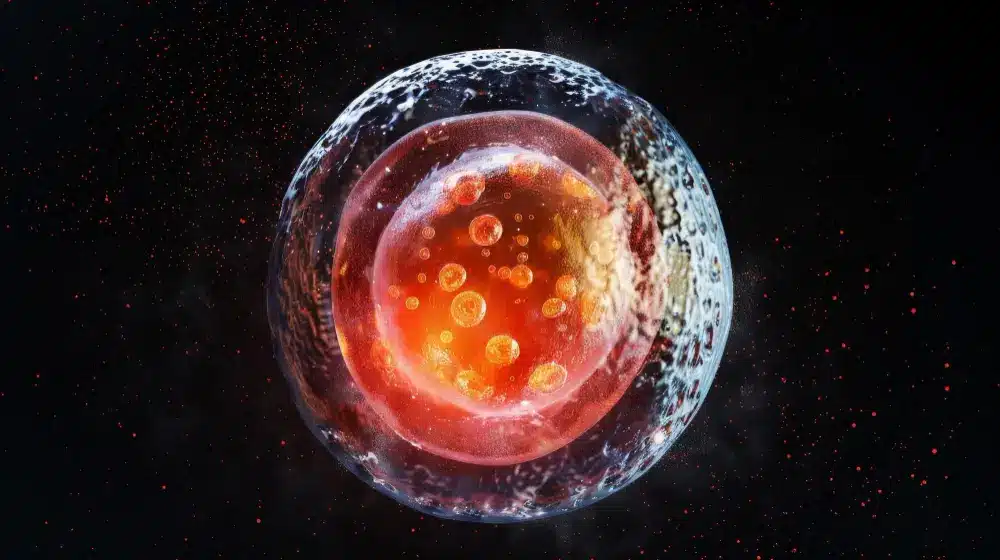
A. A blastocyst is a Day-5 or Day-6 embryo with defined structures: Inner Cell Mass (ICM), Trophectoderm (TE), and a fluid-filled cavity called the blastocoel.
Q. What is blastocyst?
A. Alternate phrasing of the same question: it is the embryo stage that forms just before implantation.
Q. When does an embryo become a blastocyst?
A. Usually between Day 5 and Day 6 after fertilization.
Q. When does a blastocyst become an embryo?
A. It is already an embryo—blastocyst is simply a stage of development.
Q. Why is the blastocyst stage important?
A. It allows clearer structural assessment before transfer or freezing.
Q. How many cells does a blastocyst have?
A. Typically 100–200+ cells.
Q. Is a blastocyst better than an embryo?
A. A blastocyst is an embryo—just more developed.
Q. Can a blastocyst implant without hatching?
A. No. The zona pellucida must be shed first.
DEVELOPMENT TIMING
Q. How long does it take to reach blastocyst?
A. About 5–6 days after fertilization.
Q. What percentage of fertilized eggs reach blastocyst?
A. Commonly 30–50% in IVF cycles; donor-egg cycles may be higher.
Q. How many Day-3 embryos make it to blastocyst?
A. Approximately 40–60%, depending on clinic and embryo quality.
Q. Why do some embryos stop growing before Day-5?
A. Often due to chromosomal abnormalities or natural developmental variation.
Q. Is Day-6 too late?
A. No. Many successful pregnancies result from Day-6 blastocysts.
Q. Do embryos continue developing after freezing?
A. No. Development pauses until thawed.
Q. Can embryos reach blastocyst on Day-7?
A. Occasionally. Some clinics may evaluate and freeze Day-7 blastocysts.
COMPARISON QUESTIONS
Q. Blastocyst vs embryo — what’s the difference?
A. “Embryo” includes all early stages; “blastocyst” is a specific advanced stage.
Q. Blastocyst vs morula?
A. Morula = compacted Day-4 embryo; blastocyst = expanded Day-5/6 embryo.
Q. Blastocyst vs gastrula — how do you distinguish?
A. Blastocyst = pre-implantation.
Gastrula = post-implantation stage forming germ layers.
Q. Which has fewer cells: blastocyst, zygote, fetus, embryo?
A. The zygote (1 cell).
Q. Is a blastocyst a fetus?
A. No. A fetus develops much later after implantation and organ formation.
BLASTOCYST STRUCTURE
Q. What is the Inner Cell Mass (ICM)?
A. The cluster of cells that becomes the fetus.
Q. What is the Trophectoderm (TE)?
A. Cells that form the future placenta and support tissues.
Q. What is the blastocoel?
A. A fluid-filled cavity inside the blastocyst.
Q. What does “expanding blastocyst” mean?
A. The blastocoel is enlarging, increasing pressure on the zona pellucida.
Q. What is a hatching blastocyst?
A. A blastocyst beginning to emerge from the zona pellucida.
Q. What is a fully hatched blastocyst?
A. One that has completely exited the zona and is ready for implantation.
GRADING & QUALITY
Q. What does 5AA mean?
A. Expansion level 5, excellent ICM (A), excellent TE (A).
Q. Are AA embryos always the best?
A. They show strong structure but do not guarantee success.
Q. Can lower-grade embryos succeed?
A. Yes. Many pregnancies come from BB or BC embryos.
Q. Do Day-6 embryos get graded differently?
A. No. The same grading system applies.
Q. Does grading show genetic normalcy?
A. No. Only PGT-A can assess chromosome status.
Q. Does embryo appearance predict implantation?
A. Not reliably. Many factors influence success.
IMPLANTATION & TRANSFER
Q. What is it called when a blastocyst attaches to the uterus?
A. Implantation.
Q. When does implantation occur after transfer?
A. Often within 2–4 days.
Q. Can hatching blastocysts implant more easily?
A. Hatching is normal but not predictive.
Q. Which is better for transfer: Day-5 or Day-6?
A. Both perform similarly in frozen cycles.
Q. Can fresh blastocysts be transferred?
A. Yes, though frozen transfers are more common today.
Q. Does uterine lining affect blastocyst success?
A. Yes. Clinics monitor and manage this carefully.
Q. Does EggDonors4All perform transfers?
A. No. Only licensed fertility clinics perform transfers.
FROZEN BLASTOCYSTS
Q. Are frozen blastocysts successful?
A. Yes. Frozen embryo transfer (FET) outcomes are strong with modern vitrification.
Q. How long can embryos stay frozen?
A. Many years. Successful births have occurred from decades-old embryos.
Q. Do frozen embryos survive thawing?
A. Most do, thanks to vitrification.
Q. Do embryos hatch after thawing?
A. Often yes—hatching may occur before transfer.
Q. Do frozen embryos degrade over time?
A. No. They remain stable in cryogenic storage.
Q. Who stores frozen embryos?
A. Licensed fertility clinics—not EggDonors4All.
STATISTICS & EXPECTATIONS
Q. How many embryos do most people need for one baby?
A. It varies based on genetics and clinical factors.
Q. How many blastocysts should I freeze?
A. Depends on family-building goals and embryo availability.
Q. Are more embryos always better?
A. Not necessarily. Quality and genetic normalcy matter more than quantity.
Q. How many blastocysts come from a donor-egg cycle?
A. Varies widely; many cycles yield multiple blastocysts.
Q. Is it normal to lose embryos between Day-3 and Day-5?
A. Yes. This reflects natural developmental selection.
DONOR EGG-SPECIFIC QUESTIONS
Q. Do donor eggs become blastocysts more often?
A. Often yes, due to egg quality and medical screening.
Q. Are donor-egg blastocysts better quality?
A. They frequently develop strongly, though grading still varies.
Q. Does sperm affect blastocyst development?
A. Yes. Sperm quality can influence embryo growth.
Q. Do donors receive embryo updates?
A. Typically no, unless arranged in advance.
Q. Does EggDonors4All create embryos?
A. No. All embryo creation occurs at licensed fertility clinics.
BIOLOGY & SCHOOL-LEVEL QUESTIONS
Q. What is a blastocyst?
A. A Day-5 embryo with an inner cell mass and outer supporting layer.
Q. Which has the smallest number of cells—blastocyst, zygote, fetus, embryo?
A. The zygote.
Q. What happens during hatching?
A. The embryo exits the zona pellucida.
Q. What comes after a blastocyst?
A. Implantation → gastrulation → early fetal development.
Q. Which IVF day is the blastocyst stage?
A. Day-5 or Day-6.
Related Blastocyst Topics
- Blastocyst vs Embryo
- Day-3 vs Day-5 vs Day-6
- Blastocyst Grading Explained
- Blastocyst Success Rates
- Frozen Blastocysts
- Hatching Blastocysts
- Blastocyst Transfer Guide
- Blastocyst Development Timeline
- Why Some Families Choose Guaranteed Blastocysts
Want clarity about your embryos or donor-egg cycle?
EggDonors4All provides donor matching, education, and structured embryo-outcome programs like Guaranteed Blastocysts—while all medical care is delivered by licensed fertility clinics.
- Explore Guaranteed Blastocysts
- Request Donor Information
- Become an Egg Donor

Dr. Veera Saghar
As an Egg Donor Coordinator, she plays a critical role in our company. Her background as a medical graduate from ISRA UNIVERSITY in Pakistan provides us with a solid foundation in the medical sciences. She has seven years of clinical experience practicing in the USA. This has given her firsthand experience when collaborating with patients and their families.
She is responsible for managing the process of egg donation from start to finish. We identify and screen potential egg donors.
- Dr. Veera Saghar

- Dr. Veera Saghar
- Dr. Veera Saghar
- Dr. Veera Saghar